The best Side of drilling fluid loss
Wiki Article
Overview Cure lost circulation, defend your wells, reduce drilling expenditures and operational danger Uncontrolled fluid loss may cause intensive destruction deep inside the reservoir, disrupting your routine and inflating operational prices.
could be the result of compressible turbulent pulsation enlargement on the general dissipation level, W/m3; and μ t
If hydrostatic stress lessens in opposition to the permeable formations, the nicely could kick, a dangerous condition of lost circulation. If kick warning signs are dismissed & the kick fluid flows to the lost zone, this may lead to an underground blowout, the worst circumstance for very well control.
Fractures can be induced via the imposed hydrostatic tension, movement dynamic forces and pipe movement. This tends to come about in normal
The leading control elements on the drilling fluid lost control effectiveness are different with diverse loss sorts, plus the affect of plugging toughness, plugging efficiency, and plugging compactness on the drilling fluid lost control performance differs, that makes the stress bearing potential, initial loss, and cumulative loss of your plugging zone have various weights during the detailed evaluation from the drilling fluid lost control effectiveness.
Comprehensive lost circulation in drilling is when there aren't any returns in the least. The fluid degree may possibly drop out of sight. Refilling the annulus with monitored volumes of lighter mud and/or drinking water or foundation oil is essential when a complete loss takes place.
Turbulence is a really perfect move point out all through drilling fluid circulation, which happens to be conductive to increasing the rock-carrying capacity of drilling fluid. The key turbulence versions utilized for the simulation of solid–liquid move course of action contain the Spalart–Allmaras product, the k �?ε
Because the perfectly depth improves, it is frequently important to boost the density of the drilling fluid to guarantee The steadiness from the wellbore within the lessen formation. Nevertheless, it frequently happens the upper non-loss development losses once the density of your drilling fluid are increased. This section reports the conduct of drilling fluid loss below diverse density ailments to explain the impact of drilling fluid density on loss. The BHP curves within the no loss and stable loss phases each gradually increase with the rise in drilling fluid density, and the general progress Is compact (Figure 12a). In the loss curve, it can be noticed the small big difference in BHP causes a comparatively shut overbalanced force, and the instantaneous loss charge curve of drilling fluid will not improve substantially with the increase in drilling fluid density. The stable loss price curve in the drilling fluid is flat With all the transform within the drilling fluid density.
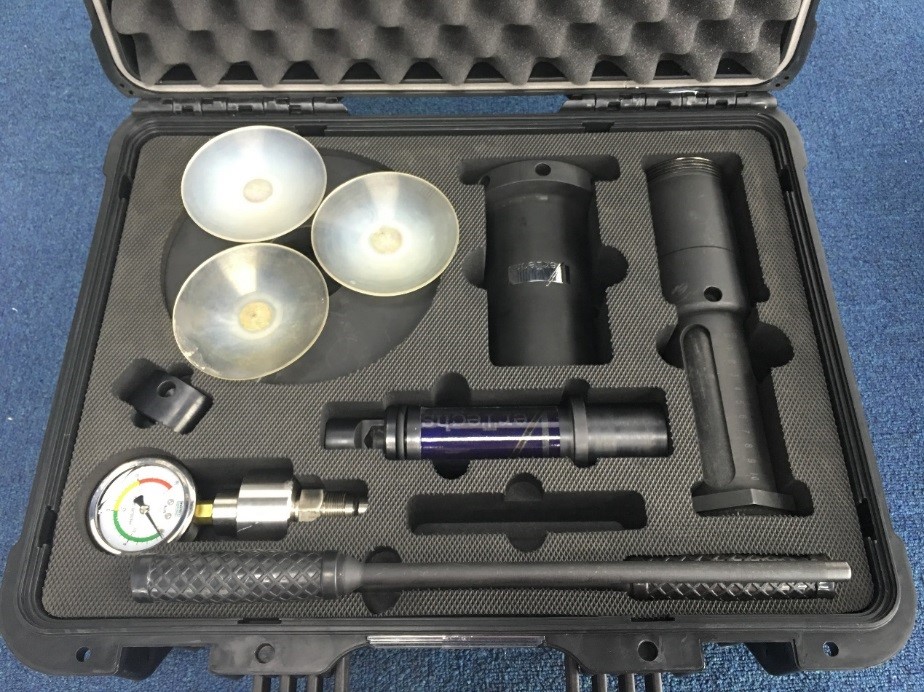
To validate the trustworthiness of numerical simulations, this examine utilized a multiphase move migration experimental equipment which has a coupled wellbore–fracture program for lost circulation testing. The equipment encompasses a wellbore diameter of one hundred fifty mm along with a size of 1.5 m, comprising a few integrated modules: wellbore–fracture vertechs.com coupling module, mud preparation–pumping integration module, and unified control–information-acquisition module.
These specialized additives do the job by sealing fractures and pores during the surrounding formation, properly protecting against undesirable fluid absorption. This generates a far more steady atmosphere for drilling functions and minimizes the dangers associated with fluid loss. Furthermore, modifications to drilling strategies can more mitigate the potential risk of fluid loss
According to the Evaluation technique of the indoor and on-web site drilling fluid lost control effectiveness in shape shown in Table four, the calculation benefits of the indoor plunger with distinctive fracture heights and the on-web page drilling fluid lost control performance fit are attained.
Minimizing circulation in the annulus over the loss may cause a number of other complications. Sluggish annular velocity lowers the carrying capability of the mud. Cuttings might accumulate in low-velocity areas and fall back to the bottom when the pump stops. This fall could trigger pipe sticking.
During drilling fluid circulation and loss, there isn't a mass Trade in between the sound and liquid phases, and the mass conservation equation for the liquid section is expressed as:
Make certain spray discharge from desander and desilterhydrocyclone for least liquid discharge from apex.